Guideline for Choosing Excavator Hydraulic Hammers

Hydraulic Hammers, also known as hydraulic breakers, rock breakers, etc. are powerful excavator attachments used to break down hard surfaces like concrete, asphalt, and rocks.

Applications:

Hydraulic breakers can be used in various heavy-duty tasks with different types of chisels. Here are some applications:
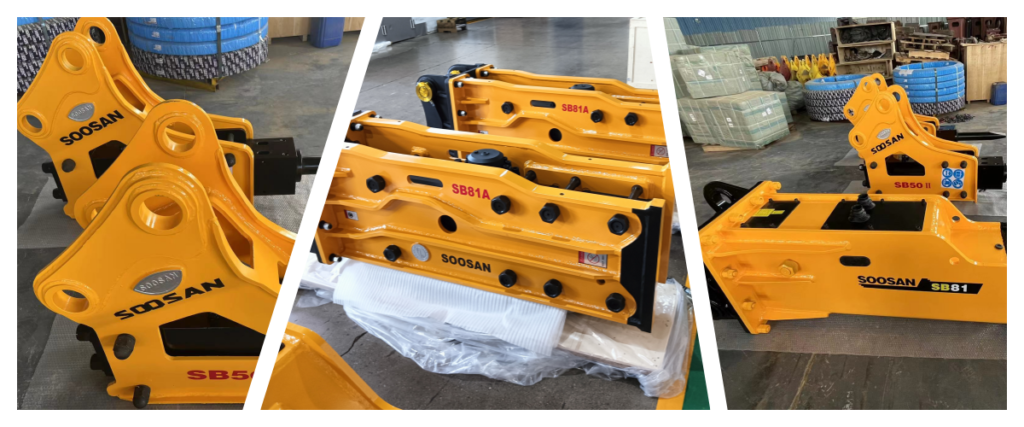
  • Rock excavation: Breaking and developing rock formations.
  • Demolition: Dismantling reinforced concrete structures and buildings.
  • Frozen soil breaking: Splitting frozen ground for pile driving.
  • Roadwork: Breaking up asphalt roads and road surfaces.
  • Utility access: Opening underground utility systems.
  • Soil compaction: Compacting soil for construction.
  • Excavation: Digging pits and trenches.
  • Pipeline installation: Laying main pipelines.
  • Fence removal: Breaking and dismantling fences.

Types of Hydraulic Rock Breakers

There are 3 main types: Side Type, Top Type, and Silence (Box) Type. Different types are designed for specific applications with different advantages in terms of performance, durability and maintenance.

Side Type Hydraulic Hammer

Features flexibility and ease of use. It is perfect for applications that require maneuverability.

  • Shorter overall length: Provides better control and ease of handling.
  • Straightforward maintenance: Open design allows for quick part replacements.
  • Cost-effective solution: Fewer components reduce maintenance downtime.

Best for: General demolition, trenching, and rock breaking in confined spaces.

Top Type Hydraulic Hammer

It’s ideal for projects demanding higher impact force and greater durability.

  • Balanced design: Eliminates side weight, reducing chisel breakage.
  • Greater impact force: Longer length and heavier mass increase efficiency.
  • Ideal for excavation work: Designed for deep penetration and consistent performance.

Best for: Large-scale excavation, foundation work, and breaking through tough rock formations.

Silence Type Hydraulic Hammer/Box Type Hydraulic Breaker

When the project is in the downtown, the noise control becomes quite important. Then the Silence Type Hammer will be the best choice.

  • Enclosed housing: Protects internal components from dust and debris.
  • Reduced vibration & noise: Rubber damping minimizes operational noise.
  • Extended lifespan: Lower impact stress on components increases durability.

Best for: Urban construction, residential projects, and noise-sensitive environments.
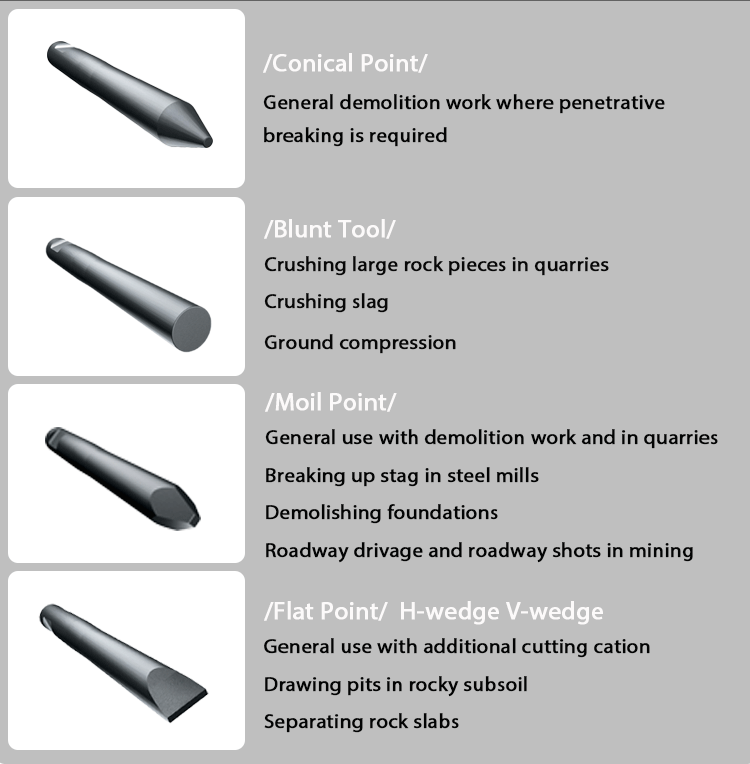
Chisel Types and Applications

Different types chisels are designed for different work. The right chisel will help your project complete well.  

  1. Moil Point Chisel: This tool is ideal for general-purpose breaking and demolition. It is effective on concrete, asphalt, and soft materials.
  2. Flat Chisel: Suitable for precision and controlled braking, perfect for cutting through concrete and rock.
  3. Blunt Chisel: Designed to break large, hard materials like boulders and reinforced concrete, dispersing impact force over a larger area.
  4. Spade Chisel: Used for digging, trenching, and prying, it efficiently removes soil and compacted materials.
  5. Specialty Chisels: Tailored for specific applications such as asphalt cutting, brick removal, and tile breaking.

Excavator Compatibility

Ensuring compatibility of the hydraulic hammer for the excavator is essential for safe and efficient operation:

  1. Excavator Weight and Size: The hydraulic hammers should suit the excavator very well. Too big might cause instability. Too small will affect the efficiency.
  2. Mounting Compatibility: The hammer should be properly mounted with correct brackets or quick-coupler systems to ensure safe and stable operation.
  3. Hydraulic Connections: Use compatible hoses and fittings to ensure efficient fluid flow and prevent leaks. High-quality fittings maintain a secure connection.
  4. Control Systems: Ensure the excavator’s control system can operate the hammer, including necessary controls for impact frequency and force. Some modern excavators have integrated systems for hydraulic attachments.

Conclusion:

When you choose a hydraulic hammer for your excavator, here are the guideline in short for your reference:

1, Please be clear about the project that the hammer will be dealing with.

2, Choose proper type hydraulic breaker.

3, Choose the suitable hammer model according to your excavator weight.

4, Choose the right chisel type. 

5, Make sure the bracket or quick coupler could make perfect match with your excavator.

If any inquires or questions, feel free to contact with JS Attachments.

Share your love
Jsattachments
Jsattachments
Articles: 3

Product Enquiry